FREQUENTLY ASKED QUESTIONS:
Below you will find the most frequently asked questions and solutions:
- On which heat sources can I use the pans?
o Our pans are suitable for use on all heat sources. Gas, electric, halogen, induction, glass ceramic (CERAN®). However, the pans are not suitable for use in the microwave.
- Can the pans go in the dishwasher?
o Yes, the pans are dishwasher safe. However, we recommend washing the pans by hand to ensure a long lifespan. Rinse the cooled product with warm water and mild dishwashing liquid, using a melamine sponge if necessary. Do not use abrasive cleaners, scouring pads or sharp or hard objects.
- Do the pans contain PFAS?
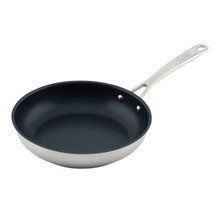
o No, the current Kuhn Rikon Fresh line does not contain PFAS. We use an ILAG Xeradur 3 PFAS-free coating. This is a ceramic non-stick coating and is completely PFAS-free.
- My pan is discolored, how is this possible and is it harmful?
o The discoloration is also called heat tint or 'rainbow stains'. This is a common discoloration of stainless steel that is caused by (over)heating the cookware before adding water or something else to it. Overheating or boiling cookware dry can cause (golden) yellow, brown, dark purple, blue or various rainbow shades on the stainless steel surface. Although the discolorations are completely harmless, these shades can spoil the appearance of the pan. However, this is only caused by a natural reaction of the steel elements to air (oxygen) and high temperatures.
o To remove these stains from your stainless steel cookware, bring ⅓ vinegar and ⅔ water to a boil, boil for 5 minutes, let cool, then rinse in the sink. For more stubborn stains or stains on the outside, use a stainless steel cleaner and a damp cloth. In any case, do not use a steel wool sponge, as this will cause scratches on the pan that will become impossible to remove.
- Deposits are forming on the non-stick coating of my frying pan or wok, how is this possible?
o The deposits that remain on the non-stick coating are also called carbonization and are the result of prolonged exposure to heat when cooking with oil or butter. This especially happens when cooking on gas, where the flame extends beyond the diameter of the base. This excessive heat can cause oil and fat to char on the non-stick coating and remain as deposits. Therefore, ensure that the flame never extends beyond the diameter of the base and preferably avoid cooking with oil sprays, as this type of fat quickly overheats.
o These stubborn stains can be removed with thorough cleaning. Fill the pan halfway with water and a little washing-up liquid. Let the liquid boil gently. The cooking process makes it easier to remove burnt residue. If necessary, use a melamine sponge.
- White spots/dots appear on the bottom of my pan.
o The (chalk) white spots on the bottom of the pans are most likely the result of the build-up of calcium in the water, or are caused by adding salt to the water before it boils. In most cases, the white spots come from calcium found in tap water. When salt is added to water before it boils, the salt sinks to the bottom instead of dissolving in the water, causing stains.
o If the mineral deposits are "baked on", a normal dishwashing cycle will usually not be sufficient to remove them. These stains can be removed by boiling a solution of ⅓ vinegar and ⅔ water. Let it cool completely and then wash and dry the pan as usual. In any case, do not use a steel wool sponge, as this will cause scratches on the pan that will become impossible to remove.